
Door won't open or won't close
Troubleshooting operator settings, safety sensors, control wiring, and mechanical binding in the track and roller path.
Serving St. Petersburg, Florida & surrounding areas
Calls answered around the clock
Describe the door issue once and we'll connect you with a local contractor who repairs commercial doors, openers, tracks, and springs.
CALL NOW: (727) 591-5758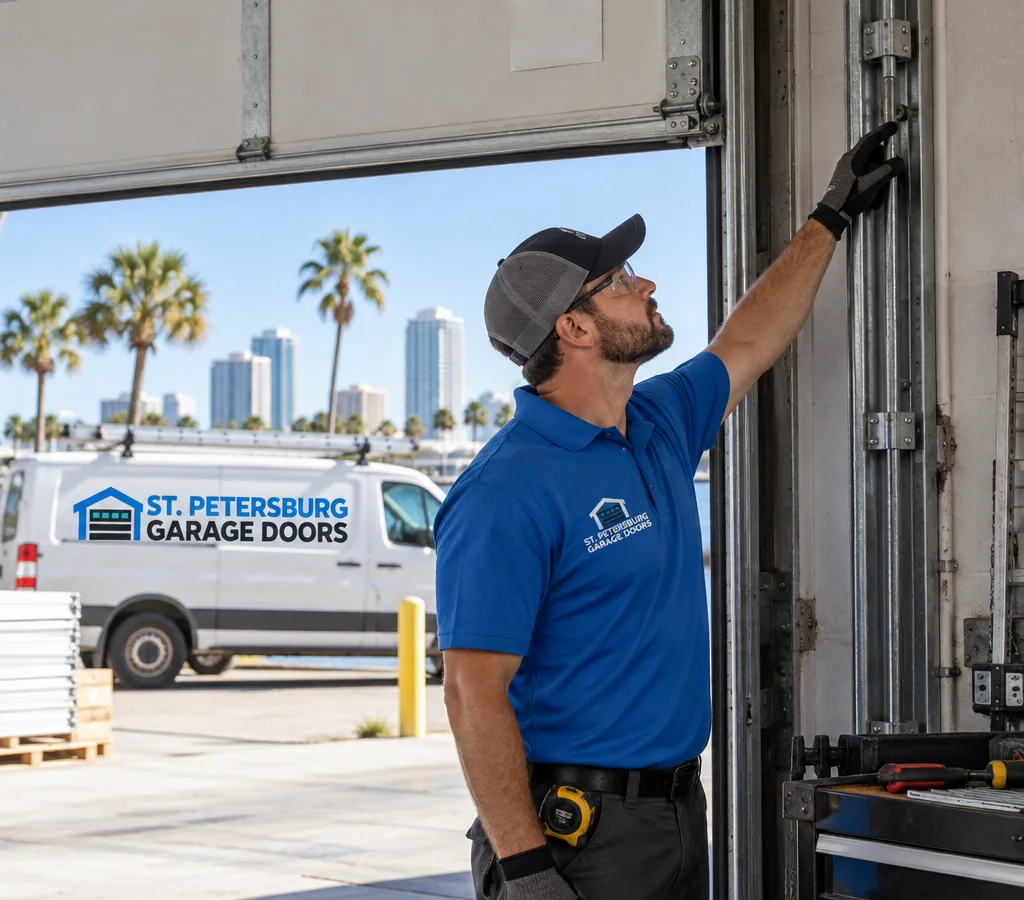
If you're searching for commercial garage door repair Largo, it usually means a door is sticking, slamming, failing to close, or showing clear wear on the spring and cable system. For a business, that turns into blocked loading bays, security concerns, and downtime around normal operations.
St. Petersburg Garage Doors is a referral service. We take your call, get the basics—door type, symptoms, and site access—and connect you with a local contractor who handles commercial overhead door repairs in the Largo area.
Commercial doors are different from most residential setups. They're commonly higher-cycle systems with heavier sections, larger drums, and stronger torsion springs. Many sites also have 3-phase operators, photo eyes, edge sensors, and safety interlocks tied into the operator.
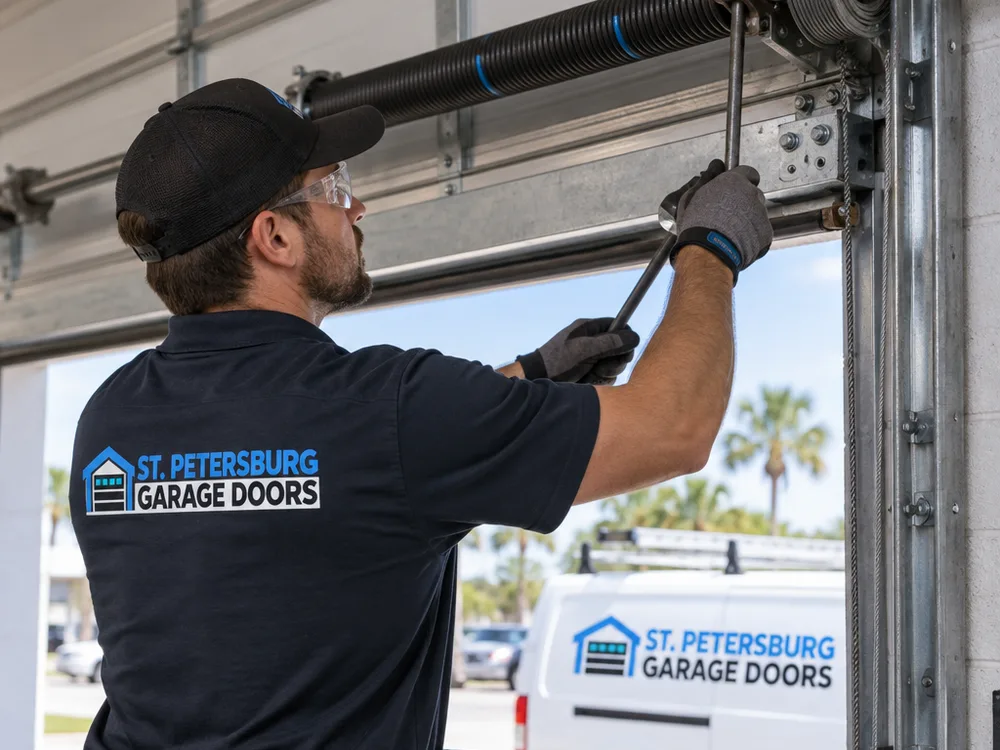
A good repair starts by identifying whether the issue is mechanical—springs, cables, rollers, hinges, or track—or operator and control related, such as limit settings, safety sensors, wiring, or the receiver.
Largo properties often include a mix of older light-industrial units and newer retail or flex spaces. Salt air across the Pinellas peninsula can accelerate corrosion on bottom brackets, roller stems, and fasteners. Rust and binding can mimic opener failure and change door balance, raising the load on the operator.
If your issue is at a home garage rather than a commercial bay, a garage door repair service can help with residential systems; this page stays focused on commercial doors and hardware.
CALL NOW: (727) 591-5758Mechanical, alignment, and operator issues can overlap. A contractor can inspect the full door system and explain what is causing the interruption.
CALL NOW: (727) 591-5758Troubleshooting operator settings, safety sensors, control wiring, and mechanical binding in the track and roller path.
Diagnosing torsion spring fatigue or breakage, verifying correct spring sizing, and restoring proper door balance so the operator isn't overloaded.
Correcting cable issues, resetting drums, inspecting bottom brackets and end bearing plates, and re-aligning track as needed.
Replacing worn rollers and hinges, checking track spacing and plumb, and looking for panel damage or loose fasteners.
Assessing whether sections can be replaced, verifying reinforcement, and making sure the repaired door still travels smoothly and seals at the floor.
Tell us what the door is doing—stuck, noisy, reversed travel, or won't close—whether it's sectional or rolling steel, and whether you see a broken spring, slack cable, or a gap in the torsion spring.
Expect questions about the operator brand or model, how the door is controlled, ceiling height, and whether access can be cleared around the opening.
The contractor typically checks door balance, cables, drums, bearings, rollers, track alignment, and opener force and limits. Photo eyes or an edge sensor are tested when present.
You'll hear what failed, what else is worn, and what replacement options make sense for your usage. The contractor provides the quote and you decide whether to proceed.
After repairs, the door is run through multiple cycles to confirm smooth travel, correct limits, and that safety devices reverse the door as intended.
If a bay door is stuck, slamming, or drifting out of alignment, describe what you're seeing once and we'll connect you with a local contractor who repairs commercial overhead doors in the Largo area.
CALL NOW: (727) 591-5758
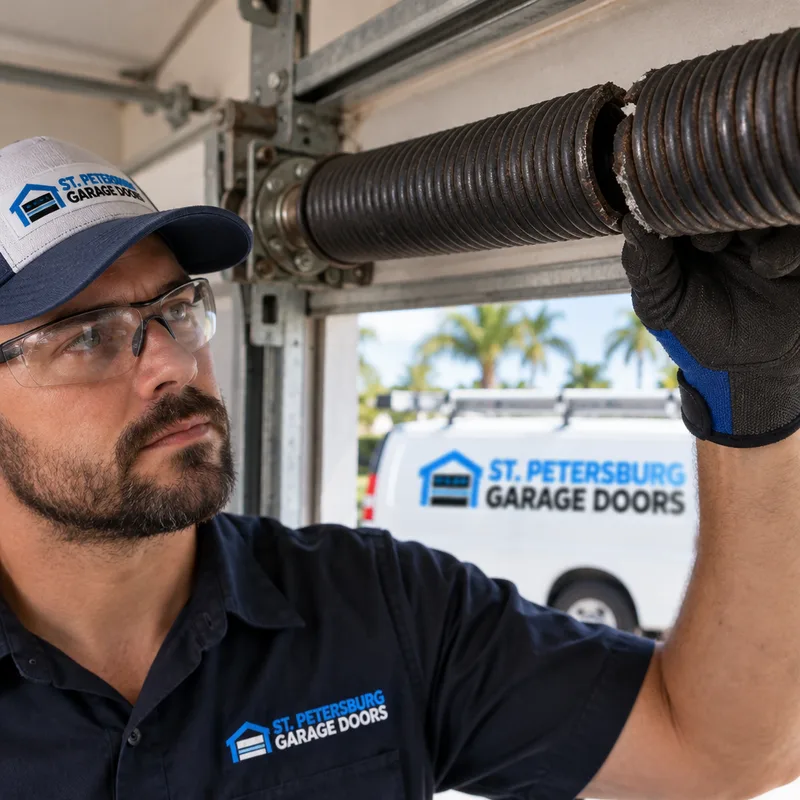
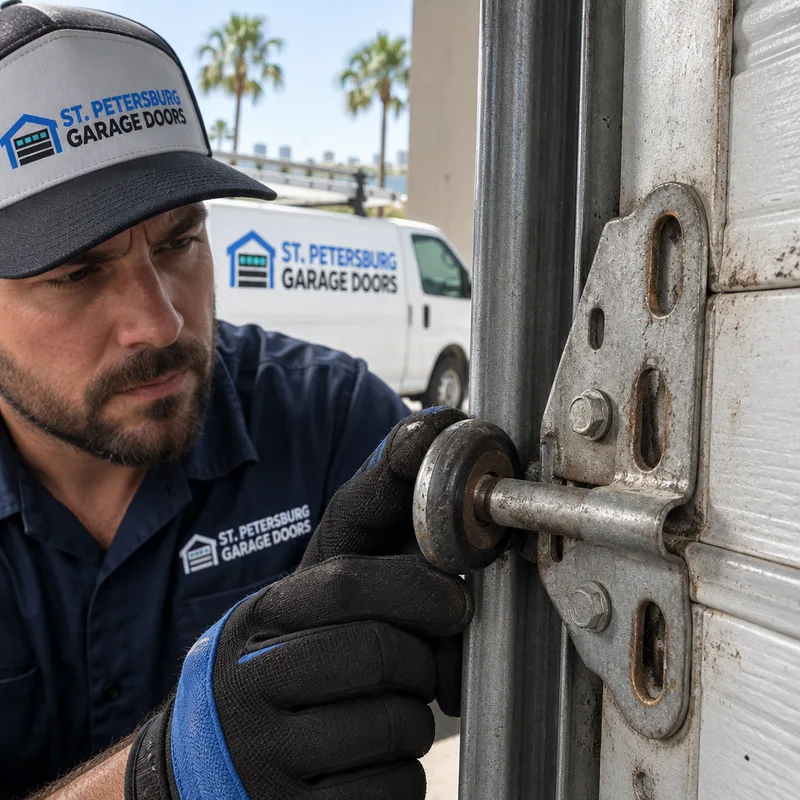
If the door feels heavy, moves unevenly, or won't stay at mid-travel when disconnected from the operator, the issue is often mechanical—springs, cables, rollers, or track. Operators also stop or reverse when safety sensors are blocked or force settings detect resistance, so binding can look like opener failure. A contractor will usually check door balance and manual travel before adjusting operator limits or force.
A loud bang, a visible gap in a torsion spring, or a door that suddenly becomes extremely heavy are common signs. Other clues include cables looking loose on the drums or the operator struggling, humming, or stopping mid-travel because the door is out of balance. Springs store significant torque, so spring work is typically handled with the correct tools and procedures.
Excess noise and shaking usually mean something is worn, loose, or misaligned, and continued cycling can worsen roller wear, hinge damage, or track movement. It can also increase strain on the operator and mounting hardware. The safer approach is to limit use until a contractor can inspect the rollers, hinges, track fasteners, and door balance.
The first checks typically include track alignment and obstructions, roller condition, hinge and bracket integrity, cable routing on the drums, bearing wear, and spring condition. If an operator is involved, the contractor usually checks limit settings, force settings, photo eyes or edge sensors, and control station issues. This sequence helps separate mechanical resistance from operator or safety-device causes.
Have the door type—sectional or rolling steel—approximate opening size, and the symptom, such as won't open, won't close, crooked, loud, or stuck halfway. If you can safely look, note whether a torsion spring has a gap, whether a cable is off the drum, and the operator brand or model. Also share site constraints such as limited header access, a high-lift track setup, or a shared loading area.
Many sectional commercial doors allow section replacement, but the decision depends on the door's construction, reinforcement, track condition, and whether the damage changed how the door travels. Bottom astragals and retainer systems are often replaceable, and a contractor may also check bottom brackets for corrosion in coastal Pinellas County conditions.
St. Petersburg Garage Doors answers your call, takes the job details, and connects you with a local contractor who serves the Largo area for commercial garage door repair. You discuss the diagnosis and quote directly with the contractor, and you choose whether to move forward.
Explain the issue once, then speak directly with a local contractor who can troubleshoot the door, springs, tracks, and operator and talk through next steps for your building.