
Describe the job once
Explain the damage, the door size, and what the door is doing. We connect you with a local contractor who handles residential garage door replacement.
Serving St. Petersburg, Florida & surrounding areas
Calls answered around the clock
Describe what happened once and get connected with a local St. Petersburg contractor who replaces damaged doors and panels on residential garages.
CALL NOW: (727) 591-5758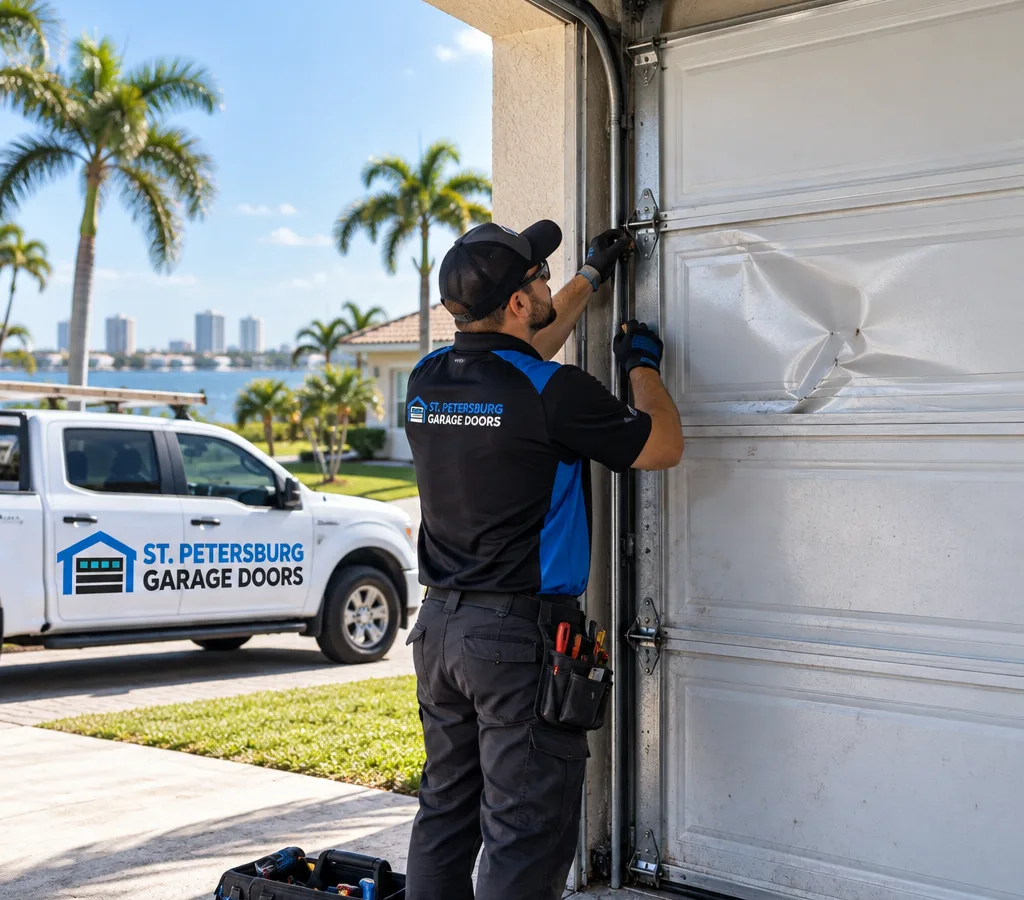
Garage door replacement is usually the right call when the door has structural damage, repeated panel failures, or wear that affects safe operation. A garage door is a moving wall made of hinged sections, rollers, tracks, cables, springs, and hinges. When the door itself is bent, waterlogged, or out of square, it can drag in the tracks, stress the opener, and keep the door from sealing.
Homeowners around St. Petersburg often start shopping for replacement garage doors after:
A contractor will typically confirm whether a full replace garage door job is needed or if a garage door panel replacement is practical. Panel replacement depends on the door model, panel availability, the age of the door, and whether the remaining sections and hardware are still straight and compatible.
If your issue is mainly with the motor, sensors, or drive system—and the door itself is in good shape—garage door opener repair is often the more direct fix. The call can start with what you see and hear, and the contractor can sort out whether the door, the opener, or both should be addressed.
CALL NOW: (727) 591-5758One call gets the replacement conversation started while leaving every project decision with you.
CALL NOW: (727) 591-5758Explain the damage, the door size, and what the door is doing. We connect you with a local contractor who handles residential garage door replacement.
You're connected with an independent contractor who serves St. Petersburg and understands common coastal wear issues like corrosion at hinges, rollers, and bottom brackets.
The contractor can confirm whether you need full replacement garage doors or a targeted garage door panel replacement based on alignment, hardware condition, and parts availability.
You talk directly with the contractor, hear the options, and decide whether to move forward.
Contractors can walk through insulation levels, wind-rated door options, window inserts, and finish choices that match the look of your house.
You share the door type (single or double), material (steel, aluminum, wood), the kind of damage, and whether the opener still moves the door or stops and reverses.
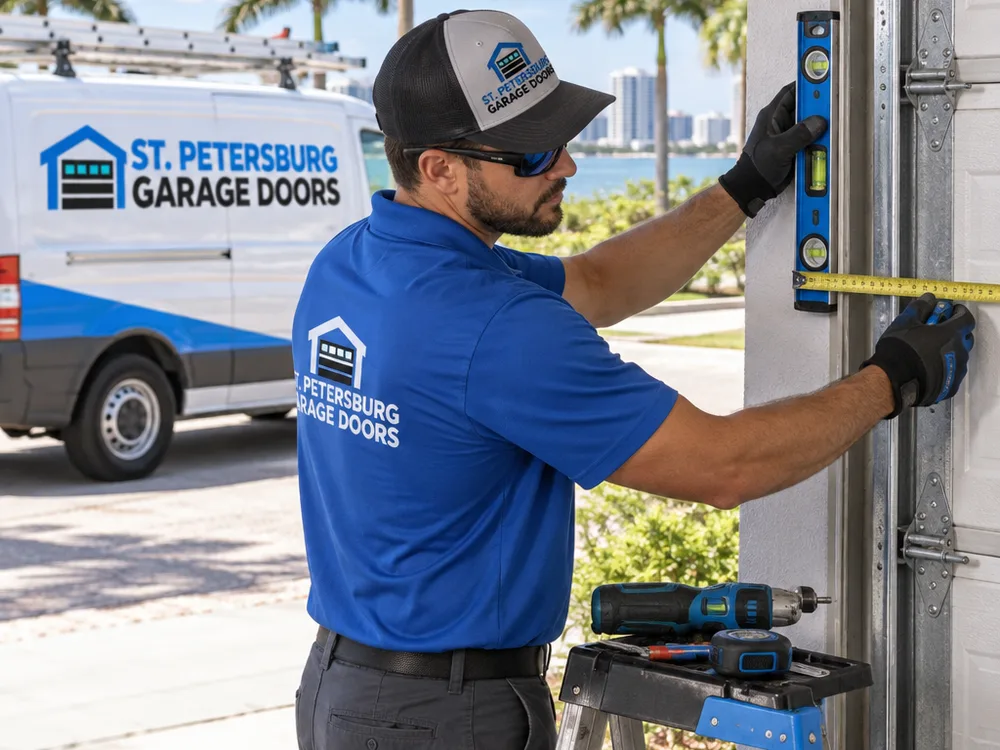
Expect a look at the opening measurements, jamb condition, track alignment, spring size, cable condition, and how the door balances by hand. If only one section is damaged, they may check if a matching panel is available.
Options usually include the door style (raised panel, flush, carriage look), insulation (non-insulated, insulated), windows, and whether existing tracks and hardware can be reused or should be replaced to match the new door.
The existing door sections are removed, then tracks and hardware are set, the new sections are stacked and hinged, springs and cables are installed and adjusted, and the door is balanced and tested.
After the door is running smoothly, the contractor can set opener limits and force settings if you're keeping the opener and verify the photo eyes and auto-reverse behavior are working as intended.
If your door is dented, rubbing the tracks, or not sealing at the floor, describe what's going on once and we'll connect you with a local contractor who can handle the replacement.
CALL NOW: (727) 591-5758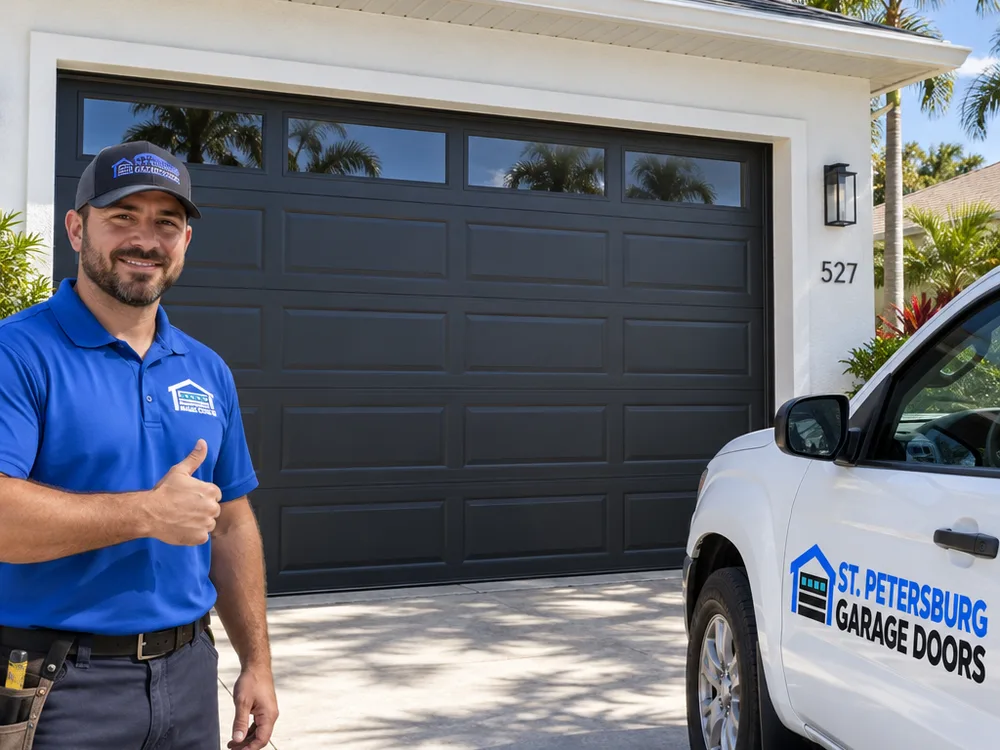
Panel replacement only works when the rest of the door is straight, compatible, and the matching panel is available. If the tracks are being pulled out of alignment, multiple sections are bent, the door is racked (diagonal), or the hinges and stiles are torn or warped, a full garage door replacement is usually the safer and cleaner solution.
Sometimes, but it depends on whether the existing hardware matches the new door's thickness, height, and weight. A contractor will look for worn roller bearings, track damage, and corrosion at bottom brackets and fasteners, which are common in coastal air. Mismatched or worn hardware can make a new door noisy, shaky, or hard to balance.
The most helpful details are the door size (single or double), whether it's a sectional roll-up or a one-piece tilt-up, the material, and what kind of damage happened. If you can also describe whether the opener strains, the door feels heavy by hand, or the door won't close flush to the floor, the contractor can narrow down the right approach before they arrive.
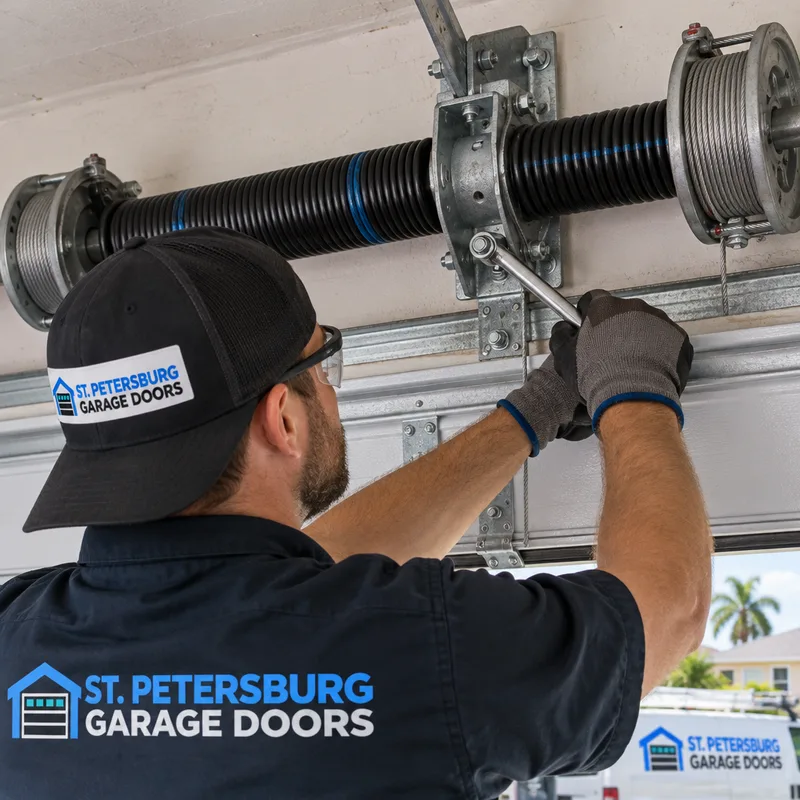
Springs and cables are sized to the door's weight and height, so a change in door type or insulation level often changes the correct spring setup. The contractor will evaluate the current torsion or extension springs, cables, and drums (if applicable) and recommend what should be replaced or resized so the new door balances correctly.
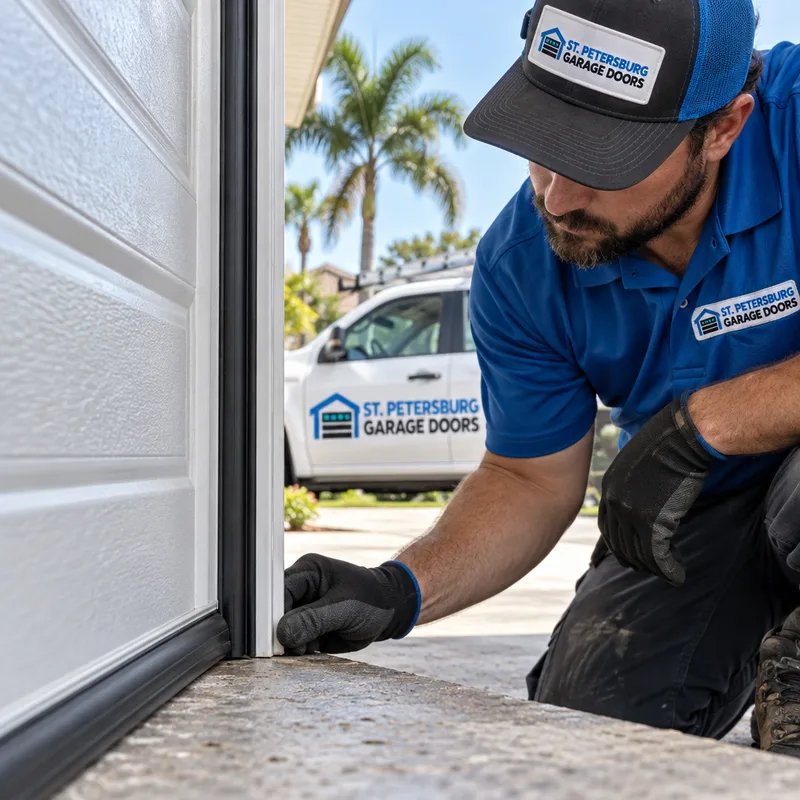
The old door sections come down, the track and hardware setup is installed or reset, then the new sections are stacked, hinged, and set into the tracks. Springs and cables are installed and adjusted, and the door is tested for smooth travel, proper balance, and consistent sealing at the sides and bottom.
Not always. If the opener is in good condition and correctly sized for the door, it may be reused, then re-set with updated limits and force settings. If the door change adds weight, or if the opener is already struggling or inconsistent, the contractor can explain whether an opener replacement makes sense along with the door.
You call, describe the door and what's going wrong, and we connect you with a local contractor who handles residential garage door replacement in the St. Petersburg area. You then speak directly with that contractor about options, scheduling, and the scope that fits your situation.
Tell us what happened and what the door is doing now, and we'll connect you with a local St. Petersburg contractor who can take it from there.